Earned It: The Indie Filmmakers Tearing Up the Rolodex and Casting on Pure Talent

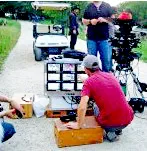
Photo: Evgeny2665, CC0, via Wikimedia Commons
Hollywood has always run on favors. You know someone who knows someone, and suddenly your cousin's roommate is the lead in a mid-budget thriller despite a resume that wouldn't fill a Post-it note. It's a system so entrenched that most people stopped questioning it years ago. But a growing corner of the indie film world is done playing that game entirely — and the results are turning heads.
Across the country, independent directors are building casting processes that look nothing like the industry standard. No preferred agency lists. No "favors for friends." No quiet phone calls between producers. Just open calls, structured evaluations, and a genuine commitment to letting performance speak louder than a LinkedIn connection.
The Problem With the Old Way
Let's be honest about what traditional casting often looks like at the indie level. A director has a network — maybe from film school, maybe from a previous project — and that network feeds into every new production. It's not always malicious. Sometimes it's just efficient. You worked with someone before, it went fine, you call them again. Rinse, repeat.
But "fine" is a low bar for cinema that's supposed to take risks. And when the same circle of people keeps getting hired, the same kinds of stories get told in the same kinds of ways. The faces on screen start to look homogenous. The performances start to feel familiar in all the wrong ways.
Director Priya Anand, whose debut feature Ordinary Distances premiered at a regional festival in Austin last spring, put it plainly in a recent interview: "I realized my initial shortlist was basically everyone I'd met at industry mixers. Which meant it was mostly people who could afford to go to industry mixers. That's a filter I didn't consciously choose, but it was absolutely there."
That realization sent her back to the drawing board — and into a genuinely different casting process.
What Blind Auditions Actually Look Like in Practice
For Ordinary Distances, Anand partnered with a local casting coordinator to run a process where initial video submissions were reviewed without names, headshots, or representation details attached. Evaluators saw only the performance itself — a two-minute self-taped scene and a brief monologue. Nothing else.
The panel making those initial cuts included Anand, her co-writer, and two people with no prior connection to the project: a theater director from Chicago and a drama professor from a community college in San Antonio. The goal was to break the echo chamber before it could form.
"We found our lead that way," Anand said. "She'd never been in a feature film. Her previous credits were regional theater and one short that had maybe 400 views on Vimeo. Under the old system, she never would have made it past the first filter. Under ours, she was undeniable."
This isn't an isolated story. Across indie productions in cities like Atlanta, Portland, Detroit, and Philadelphia, filmmakers are experimenting with similar frameworks — and consistently reporting that they're surfacing talent they never would have found otherwise.
Diverse Panels Aren't Just a Moral Choice — They're a Creative One
One of the quieter revelations coming out of these new casting approaches is how much the composition of the evaluation panel shapes outcomes. When the only people in the room share the same background, the same training, and the same aesthetic preferences, they tend to reward performances that feel familiar to them. That's not objectivity — that's just a different kind of bias wearing a professional mask.
Filmmaker Marcus Webb, whose horror-adjacent drama Saltwater Gospel is currently in post-production, deliberately built a casting panel that included people outside the film industry entirely. A high school drama teacher. A spoken word poet. A retired social worker who'd spent decades working with at-risk youth in Baltimore.
"Those outside voices caught things we were missing," Webb explained. "The social worker kept flagging moments where an actor's emotional truth felt performed versus felt real. She had no film vocabulary for it, but she was right every single time. That perspective was invaluable."
The argument here isn't that industry expertise doesn't matter — it absolutely does. It's that expertise alone, drawn from a narrow slice of the same world, creates blind spots. Diverse panels don't dilute the process; they sharpen it.
Shutting Out the Gatekeepers
Perhaps the most radical move some indie directors are making is explicitly telling agents and managers to stay out of the initial process. Not as a slight, but as a structural decision. Representation, by its very nature, advocates for its clients — which means well-connected actors with powerful agents start every audition with an invisible advantage.
Some productions are now running what amounts to a two-track system: an open submission process for anyone, and a separate invited track for represented talent — with both tracks evaluated by the same panel using the same criteria. The playing field isn't perfectly level, but it's dramatically more even than the default.
The results keep pointing in the same direction. Unknown performers are landing major roles. Represented actors who coast on reputation are getting cut in early rounds. And the productions themselves are ending up with ensembles that feel genuinely alive on screen — because the chemistry comes from real discovery rather than comfortable familiarity.
The Ripple Effect
What happens after these films get made matters too. When an unknown actor delivers a breakthrough performance in an indie feature that gets real distribution — even modest distribution — it changes their trajectory. It creates a new data point in an industry that runs on data points. Suddenly they're on lists. Suddenly people are calling.
That's the long game these filmmakers are playing. Not just making one good movie, but actively expanding who gets to be in the conversation at all. Every time a merit-based process surfaces someone the industry had overlooked, it chips away at the myth that the people already in the room are there because they're the best. Sometimes they are. Often, they just knew the right people first.
Indie film has always positioned itself as the alternative — the space where the rules get bent and the gatekeepers don't get the final word. But that identity only means something if it extends all the way to casting. It's easy to be radical in your subject matter while staying completely conventional in who you let tell the story.
The filmmakers building these new systems are proving there's another way. It takes more work, more intentionality, and a genuine willingness to be surprised. But if you're making cinema that dares to be different, that seems like the bare minimum.