Less Gear, More Guts: The Indie Filmmakers Turning Technical Limitations Into Their Biggest Creative Asset
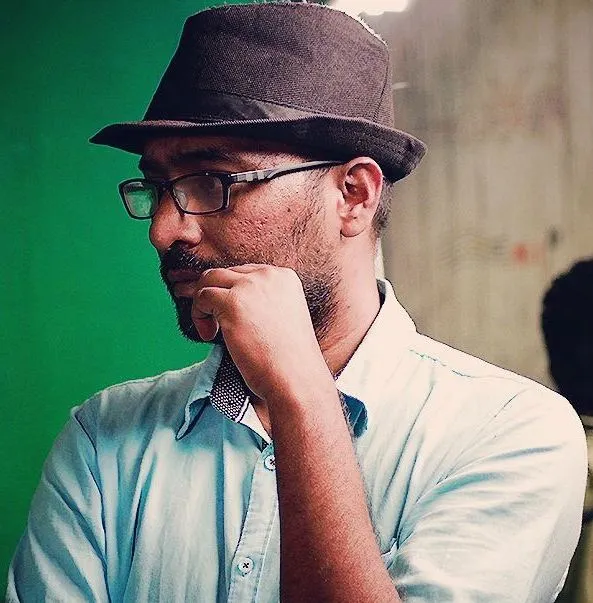
Photo: Joinfilmsprod, CC BY-SA 4.0, via Wikimedia Commons
There's a quiet rebellion happening inside indie cinema, and it doesn't look like what you'd expect. It's not loud. It's not flashy. It's grainy, slightly out of focus, and shot on something your cousin probably sold at a garage sale in 2019.
A growing number of emerging filmmakers across the US are making a deliberate choice to work with lo-fi equipment — smartphones, vintage camcorders, consumer-grade DSLRs, even Super 8 film — not out of financial necessity, but as a full-on artistic strategy. They're not apologizing for it either. They're leaning in hard, and the results are some of the most visually distinctive work hitting the indie circuit right now.
So what's going on? Why would any filmmaker with access to a RED camera or an ARRI rental house voluntarily reach for a decade-old Flip camera?
The short answer: because it forces you to actually think.
The Tyranny of Too Many Options
Here's something film school doesn't always tell you — more gear doesn't mean better filmmaking. In fact, it often means the opposite. When you've got a $50,000 camera package, a full lighting crew, and seventeen different lens options, it's easy to spend three hours on a setup that could've been solved in twenty minutes with a bounce card and a little ingenuity.
Maya Oduya, a Brooklyn-based director whose debut short Saltwater was shot entirely on a 2014 iPhone 6, puts it bluntly: "When I picked up that phone, I stopped overthinking every single frame. I knew what it could and couldn't do. That clarity was honestly kind of liberating."
Saltwater screened at three regional festivals last year and picked up a cinematography award — which, yes, caused some raised eyebrows among the gear-obsessed corners of filmmaker Twitter. But Oduya's point holds up under scrutiny. Constraint forces decision-making. And decisive filmmaking almost always reads better on screen than technically perfect but emotionally hollow work.
Vintage Gear and the Aesthetic of Authenticity
For other filmmakers, the pull toward older equipment is less about stripping things down and more about chasing a specific texture that modern digital cameras just can't replicate.
Take Denver-based director Caleb Marsh, who's been shooting on a beat-up Sony Handycam from 2003 for the past two years. His short film Subdivisions, a meditation on suburban isolation in the American Midwest, has a visual quality that immediately sets it apart from anything else in its festival cohort. The washed-out colors, the slight interlace artifacts, the way the camera struggles in low light — it all works in service of the story's mood in a way that feels genuinely earned rather than filtered on.
"People keep asking me what LUT I used," Marsh laughs. "I'm like, that's just... what the camera looks like. There's no trick."
That authenticity is increasingly valuable in a market absolutely drowning in content that looks the same. When every streaming platform has access to the same high-dynamic-range, color-graded-within-an-inch-of-its-life visual language, a film that looks genuinely different becomes its own kind of statement.
DIY Rigs and the Physics of Problem-Solving
Then there's the DIY rig crowd — filmmakers who build their own stabilizers, rigs, and mounts out of hardware store parts and sheer stubbornness. It sounds chaotic, but the creative outcomes can be remarkable.
San Antonio filmmaker Rosa Delgado built a custom shoulder rig out of PVC pipe and foam padding for her feature-length debut The Corridor, a psychological thriller shot in the hallways of an old Texas motel. The rig's slight wobble — something a professional stabilizer would've eliminated — ended up becoming a signature element of the film's uneasy, claustrophobic energy.
"I tried to fix it at first," Delgado admits. "Then I watched the footage back and thought, no, this is actually doing something. The camera feels nervous. The character is nervous. It works."
This kind of happy accident is almost impossible to engineer with professional equipment. The very precision that high-end gear promises can sand away the rough edges that give a film its soul.
Constraint as a Storytelling Filter
There's a deeper creative principle at work here that goes beyond aesthetics. When you're working with limited equipment, every choice becomes load-bearing. You can't rely on coverage. You can't shoot forty takes hoping something magic happens in post. You have to know what you want before you roll, and that discipline ripples all the way back through the writing and the production design and the performance.
Oduya describes it as a kind of editing that happens before you even press record. "You start to write differently when you know you're going to shoot on a phone," she says. "You stop writing scenes that need twenty setups. You start thinking about what one great image can carry."
That's a genuinely different creative muscle than the one most film school curricula are designed to build. And in a landscape where indie filmmakers are competing not just against each other but against the entire content ecosystem — YouTube, TikTok, prestige TV — having a genuinely distinctive visual voice might matter more than having the cleanest image.
The Market Logic (Yes, There Is Some)
It's worth noting that this isn't purely an aesthetic choice existing in a vacuum. There's a real strategic logic to constraint-driven filmmaking for emerging directors trying to break through.
A film that looks like everything else on the festival circuit is easy to overlook. A film that looks like nothing else demands engagement, even from skeptical programmers. Lo-fi aesthetics, when they're clearly intentional rather than accidental, signal a filmmaker who knows exactly what they're doing — which is exactly the kind of confidence that gets people noticed.
Caleb Marsh got his first meeting with a production company not in spite of the Handycam footage in Subdivisions, but because of it. "They said it looked like I had a point of view," he recalls. "Which, honestly, is the whole game."
The Takeaway
None of this is an argument against good equipment or against learning how to use professional tools. Technical craft matters. But the indie filmmakers doing the most interesting work right now seem to understand something important: the camera is not the film. The vision is the film. And sometimes the best way to find your vision is to take away every option except the essential ones.
Busk on that for a minute.
The next time you're stressing about not having access to the gear you think you need, consider the possibility that the limitation isn't the problem. It might be the whole point.