Safe Sets, Better Performances: Why Indie Filmmakers Are Finally Taking Intimacy Coordination Seriously
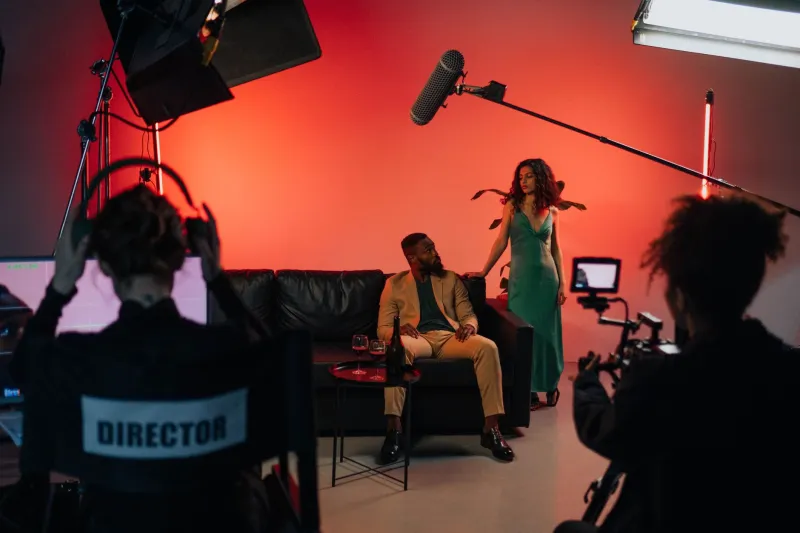
There's a version of indie filmmaking mythology that still gets romanticized in film school hallways and Reddit threads — the scrappy director who wings it, who figures it out on the fly, who doesn't have time for "bureaucratic" stuff like formal protocols. That version of filmmaking has always had a dark side. And when it comes to intimate scenes, that dark side has left real damage.
But something is shifting. A younger, more intentional generation of independent filmmakers is rethinking what it means to run a professional set — not in spite of their limited resources, but because of them.
What an Intimacy Coordinator Actually Does
If you're not familiar with the role, here's the short version: an intimacy coordinator is a trained professional who works with directors and actors to choreograph, rehearse, and monitor scenes involving nudity, simulated sex, or any physical contact that requires heightened sensitivity. Think of them as a combination of movement coach, consent advocate, and creative collaborator.
The role exploded into mainstream awareness after the #MeToo movement forced Hollywood to reckon with decades of unchecked on-set behavior. Major streaming platforms and studios started requiring them for relevant productions. SAG-AFTRA began formalizing guidelines. And slowly, the conversation started trickling down to the indie world.
The assumption was that smaller productions couldn't afford them. Turns out, that assumption was wrong — and more than a little shortsighted.
The Cost Argument Doesn't Hold Up
Here's what a lot of indie directors don't realize: many intimacy coordinators actively want to work with independent productions. Some offer sliding scale fees. Others take on passion projects at reduced rates because they believe in the work. Organizations like the Intimacy Professionals Association have been actively expanding their reach beyond studio productions.
When you factor in what bad handling of intimate scenes actually costs — a performer who shuts down emotionally, a reshoot because the chemistry felt forced, an actor who tells their network the set wasn't safe — the math starts looking pretty different. Reputation travels fast in the indie world. A set known for being thoughtful and actor-centered is a set that attracts serious talent.
Directors who've brought coordinators onto low-budget projects consistently say the same thing: it paid for itself in ways that didn't show up on a spreadsheet.
Boundaries Don't Kill Chemistry — They Create It
This is the part that surprises people most. There's a persistent belief that spontaneity is the lifeblood of authentic intimate performance — that too much planning kills the electricity. Filmmakers who've worked with intimacy coordinators tend to push back hard on that idea.
What actually kills chemistry is anxiety. Uncertainty. An actor who doesn't know where a director's hands are going to end up, or whether their co-star is going to improvise something they didn't agree to. When performers are guarded, it reads on camera. You can feel the self-protection.
When actors walk into a scene knowing exactly what's choreographed, what's off-limits, and that someone on set is specifically there to advocate for them — they relax. And relaxed actors are present actors. Present actors give you the real thing.
Several indie directors have described watching their cast members visibly transform once a coordinator established the rehearsal process. The formality of it — the explicit conversations about boundaries, the clear storyboarding of physical movement — didn't make the scenes feel clinical. It made them feel safe enough to be genuinely vulnerable.
Attracting Actors Who Have Options
Here's a practical reality of casting in the indie space: experienced actors — the ones who've worked on bigger productions and know what professional sets look like — have choices. They can take the union gig with the catering and the trailers, or they can take your passion project. Your pitch has to be more than just the script.
A growing number of actors are now explicitly asking about intimacy coordination during the audition process. They want to know before they sign on whether a production has thought this through. For indie filmmakers trying to attract performers who bring real craft and credibility to their projects, having a clear answer to that question is increasingly a competitive advantage.
It signals something beyond just the specific scenes in question. It signals that the director thinks seriously about the human beings on their set. That matters to actors who've been burned before.
Building the Protocol When You Can't Hire a Coordinator
Not every micro-budget production can bring on a dedicated intimacy coordinator, even at a reduced rate. That's a real constraint, and pretending otherwise doesn't help anyone. But the principles behind the practice are accessible to any filmmaker willing to do the work.
That means having explicit conversations with actors before the shoot — not just a general vibe check, but specific discussions about what will and won't be shown, what physical contact is required, what the actor is and isn't comfortable with. It means documenting those agreements. It means creating a closed set for relevant scenes, limiting crew to essential personnel only. It means building in time for performers to voice concerns without it feeling like a disruption to the schedule.
Some indie filmmakers have started partnering with intimacy coordinators in a consulting capacity — bringing them in for a half-day rehearsal rather than the full shoot, or using them to develop a protocol document that the director then carries into production. Creative solutions for creative people.
The Bigger Picture
Independent cinema has always been where the film world's conscience lives. It's where stories get told that the studios won't touch, where new voices push the form forward, where the rules get rewritten. That's the whole point.
But progressiveness in storytelling has to match progressiveness in practice. A film can have all the right politics on screen and still be a harmful place to make. The indie world has historically gotten a pass on set culture because of the mythology of scrappiness — because passion was supposed to be enough, because everyone was supposed to suffer a little for the art.
That mythology is losing its grip. The filmmakers leading the next wave of independent cinema are building sets that reflect the values their films are actually about. They're figuring out that taking care of their collaborators and making something extraordinary aren't competing priorities.
Turns out, they never were.