No Marquee, No Problem: The Directors Throwing Their Own Premieres in Places You'd Never Expect
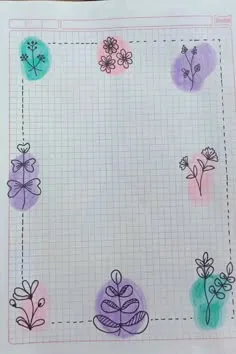
Photo: outdoor rooftop movie screening crowd urban night city lights projector, via i.pinimg.com
There's a loading dock on the east side of Detroit where, on a humid Saturday night last August, about 200 people crammed in with lawn chairs, blankets, and cold cans of whatever they'd smuggled in from the corner store. A bedsheet hung between two rusted support beams. Someone's car battery powered a projector. And a first-time director named Camille Osei watched the crowd react to her debut feature — laughing, gasping, and eventually giving her a standing ovation in a space that smelled faintly of motor oil and old concrete.
No red carpet. No press junket. No distribution deal to speak of — at least not yet.
"I knew if I waited for someone to give me permission to show my film, I'd be waiting forever," Osei told us over the phone a few weeks later. "So I just stopped waiting."
She's far from alone.
The New Festival Circuit Runs Through Your City's Forgotten Corners
Across the country, a loose but increasingly organized movement of independent filmmakers is bypassing traditional exhibition infrastructure entirely. They're not waiting for Sundance callbacks or theatrical distribution offers. Instead, they're scouting rooftops in Brooklyn, vacant storefronts in East Austin, parking structures in Los Angeles, and yes, loading docks in Detroit — transforming these overlooked spaces into something that feels genuinely electric in a way that a Tuesday night multiplex screening rarely does.
The logistics are scrappy but not as chaotic as you might think. Most organizers use platforms like Eventbrite or direct Instagram DMs to manage RSVPs, keeping crowds manageable and creating a sense of exclusivity that actually drives demand. Ticket prices typically range from ten to twenty-five dollars — enough to cover equipment rental, a proper audio setup, and sometimes even a small honorarium for the filmmaker. A few of these events have sold out within hours.
Director and Brooklyn-based cinematographer Marcus Fells has now thrown three of these events for two different short films and one feature. His first screening, held on the roof of a Bushwick art collective, drew 80 people. His most recent pulled in over 300 across two nights. "The word-of-mouth is insane," he said. "People who come feel like they're in on something. They tell their friends because it feels like a secret worth sharing."
Why Traditional Exhibition Wasn't Working for Them
To understand why filmmakers are going this route, you have to understand how brutal the traditional path can be. Film festivals, even the well-regarded regional ones, are flooded with submissions. A feature might wait 18 months just to hear back from three or four of them. Theatrical distribution, meanwhile, is increasingly consolidated around franchises and IP. The independent film section at your local AMC isn't exactly thriving.
Streaming platforms offer some relief, but the discovery problem is real — getting buried in an algorithm is its own kind of invisibility. A film that took three years to make can disappear into a platform's catalog without a single person knowing it exists.
Pop-up screenings solve the discovery problem in the most direct way imaginable: you physically put people in a room with your film. You're there to answer questions. The audience has opted in, traveled to an unusual location, and arrived with their expectations already heightened. That's not a passive viewing experience — it's a communal one.
"People are so used to watching things alone on their phones," said Osei. "When you put them in a space together, something shifts. They're present in a way they aren't at home."
Building a Real Audience, One Weird Venue at a Time
What's particularly striking about this movement is that it's not just creating buzz — it's building durable, loyal audiences. Filmmakers who've run multiple pop-up events report that a significant portion of attendees come back for subsequent screenings, sometimes traveling across cities to do so. Social media amplifies everything, but the community feel is what sustains it.
Los Angeles-based director Priya Nair, whose debut feature explores the lives of undocumented workers in the San Fernando Valley, has held screenings in a converted warehouse in Boyle Heights and, memorably, in the basement of a Vietnamese restaurant in Westminster. She's built a mailing list of over 2,000 people who've attended at least one of her events.
"These are my people now," she said, laughing. "They follow the work because they feel connected to it. That's not something you can manufacture with a press release."
Nair's screenings have also attracted the attention of a regional distribution company that approached her after a mutual contact attended one of her Boyle Heights events. She's currently in early conversations about a limited theatrical run — something she credits entirely to the audience she built on her own terms first.
The Logistics (and the Legal Gray Areas)
It would be dishonest not to mention that this model comes with real challenges. Permits are a genuine headache — some cities require event permits for gatherings above a certain size, and venues that aren't licensed for public assembly can create liability issues. Most organizers navigate this by keeping events semi-private, framing them as invite-only or membership-based rather than fully public.
Weather is an obvious factor for outdoor events. Equipment failure is another. Fells described one screening where his audio setup shorted out twenty minutes into the film and he had to improvise with a Bluetooth speaker while someone ran to find a replacement cable. "People stayed," he said. "That told me everything."
There's also the question of revenue sustainability. While these events can generate real income, they're not a replacement for distribution — they're a complement to it, or a launchpad toward it. The filmmakers doing this most successfully treat each screening as both a community event and a business development opportunity, collecting emails, building social followings, and using the momentum to open doors.
What the Industry Is Starting to Notice
Here's the thing that should make traditional distributors at least a little nervous: some of these filmmakers are generating more genuine audience engagement through a handful of pop-up screenings than comparable films get through conventional distribution pipelines. The numbers are smaller, sure, but the depth of connection is something else entirely.
A few boutique distributors and film programmers have started quietly attending these events, scouting not just for films but for filmmakers who've already done the hard work of building an audience. In an industry where marketing budgets are shrinking and algorithmic discovery is increasingly unreliable, a director who can fill a rooftop twice in one weekend is genuinely valuable.
For Camille Osei, the Detroit loading dock screening led to two festival invitations, a write-up in a local arts publication, and a conversation with a producer who'd been forwarded a clip from the event on Instagram. None of that came from a traditional submission process.
"Cinema doesn't need a building," she said. "It just needs people who care enough to show up."
In a bedsheet-and-car-battery kind of way, that's always been true. These directors are just finally acting on it.