Forget Sundance: The Indie Filmmakers Building Real Audiences Without the Festival Gatekeepers
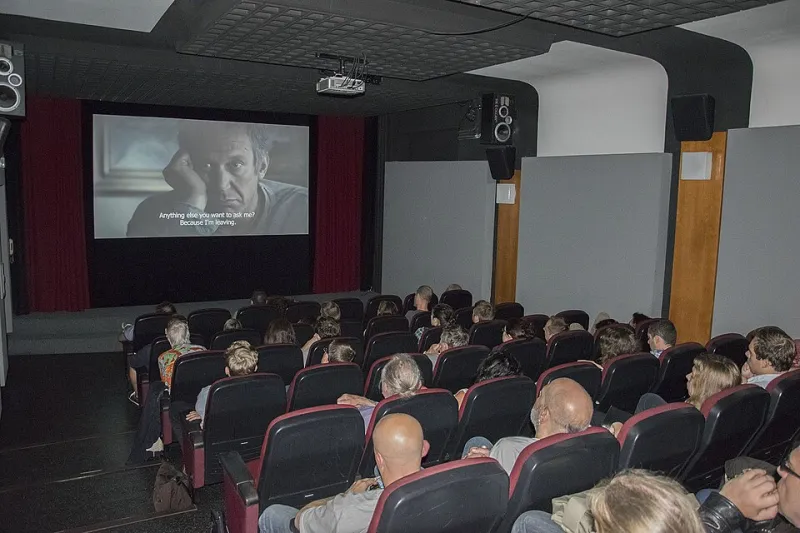
Photo: Elena Ringo, CC BY-SA 4.0, via Wikimedia Commons
Let me say something that might ruffle some feathers in certain Park City hotel lobbies: the film festival circuit, as a distribution strategy, is broken for most independent filmmakers — and the sooner we collectively acknowledge that, the better off emerging voices will be.
This isn't a knock on the films that succeed at Sundance, Tribeca, or SXSW. Some genuinely transformative work comes through those channels, and the cultural prestige those festivals carry is real. But the assumption — the deeply embedded, rarely questioned belief that a festival premiere is the necessary first step toward any meaningful distribution — is doing serious damage to how independent filmmakers think about their own careers and their relationships with audiences.
It's time to interrogate that assumption out loud.
The Gatekeeper Problem
Here's what the festival model actually looks like for most filmmakers who aren't coming in with industry connections, a recognizable cast, or the backing of a production company with existing relationships: you spend months submitting, pay submission fees that add up fast, and then wait. If you're lucky, you get a slot. If you're very lucky, a distributor notices. If you're extraordinarily lucky, something resembling a deal materializes — often one that doesn't pay what you'd hope and cedes significant control over how and when your work reaches viewers.
For every Beasts of the Southern Wild discovery story, there are hundreds of genuinely excellent films that screened at a festival, got polite reviews in trade publications, and then effectively disappeared. The filmmakers moved on, exhausted and often in debt, and the audience that would have loved that film never got the chance to find it.
That's not a distribution system. That's a lottery.
The Platforms Are Different Now
What's changed — and changed dramatically — is the infrastructure available to filmmakers willing to think differently about distribution. The platforms that exist today weren't available even ten years ago in the same form, and the ones that were have matured enormously.
Mubi, Fandor, and Criterion Channel have built subscriber bases of genuinely passionate cinephiles who are actively looking for challenging, unconventional work. These aren't passive Netflix scrollers hoping something decent surfaces — these are people who want to be surprised, disturbed, moved, and challenged by what they watch. Getting a film onto one of these platforms doesn't have the cultural cachet of a Sundance premiere, but it puts your work in front of exactly the audience that will care about it.
Meanwhile, Vimeo On Demand and platforms like Gumroad allow filmmakers to sell directly to viewers, retaining a far larger percentage of revenue and building a direct relationship with the people watching. That relationship — knowing who your audience is, being able to communicate with them, understanding what resonates — is something the traditional festival-to-distributor pipeline strips away entirely.
The Community-First Filmmakers
Some of the most interesting distribution experiments happening right now aren't happening on platforms at all. They're happening in living rooms, community centers, and bars.
Grassroots exhibition — what some in the film world are calling the "microcinema" movement — has been quietly building momentum across the US for years. Filmmakers are self-organizing screening events in cities where they have communities: renting out small venues, partnering with local coffee shops and bookstores, bringing in the director for a Q&A, and charging a door fee that actually covers costs. These aren't vanity screenings. They're genuine community-building exercises that create loyal, invested audiences who feel personally connected to the work.
Filmmaker Zia Anger turned her own creative crisis into a touring live performance-film hybrid called My First Film that played unconventional venues across the country and built a passionate following through sheer word of mouth and the intimacy of the experience. It didn't need a distributor. It needed an audience willing to show up — and she gave them a reason to.
Social Media Is a Distribution Tool, Not Just Marketing
Here's where I'll probably lose a few people, but bear with me: TikTok, Instagram, and YouTube are not just promotional channels for films that exist elsewhere. For a growing number of creators, they are the primary distribution infrastructure.
I'm not talking about dumbing content down or chasing algorithms. I'm talking about filmmakers who understand that a 12-minute short film released as a YouTube video, supported by a genuine community of subscribers who care about the creator's work, can reach more meaningful viewers than a festival screening in a 200-seat theater.
Karyn Kusama, Boots Riley, and other filmmakers who've built devoted followings have spoken openly about the power of direct audience relationships. The filmmakers coming up behind them are taking that lesson further — using Patreon to fund work, using Discord communities to build conversations around it, using newsletters to give viewers context and access that traditional distribution never offered.
This isn't selling out. This is understanding where culture actually lives in 2024.
The Real Cost of Chasing Prestige
There's a psychological dimension to this that doesn't get discussed enough. The festival industrial complex runs on prestige, and prestige is a powerful drug. It shapes how filmmakers value their own work, how they make creative decisions, and how they measure success. When Sundance becomes the implicit benchmark, everything else feels like failure — including building a genuinely devoted audience of 10,000 people who love what you make.
That's backwards. A filmmaker with 10,000 true fans who support their work financially and emotionally is in a more sustainable position than one who got a festival slot, a review in Variety, and then silence.
The indie filmmakers worth watching right now are the ones who've internalized this. They're not anti-festival — they're post-festival in their thinking. They're asking different questions: Who is this film for? How do I find those people? What do I need from them, and what can I offer in return?
What This Means for the Rest of Us
If you're an emerging filmmaker reading this, here's what I'd encourage you to take seriously: start building your audience before your film is finished. Not to market it — to have a genuine community waiting for it. Document your process. Share your influences. Be a real person with a real perspective, not a press release.
And when your film is done, think hard about what success actually looks like for this specific work. Maybe a festival premiere is the right move. Maybe it isn't. The point is to make that decision intentionally, with clear eyes about what the festival circuit can and cannot deliver — rather than defaulting to it because it's what you're supposed to do.
The gatekeepers are still there. But the gates? Those are wide open.