Cut Out the Middleman: Indie Filmmakers Are Rewriting the Rules of Getting Their Movies Seen

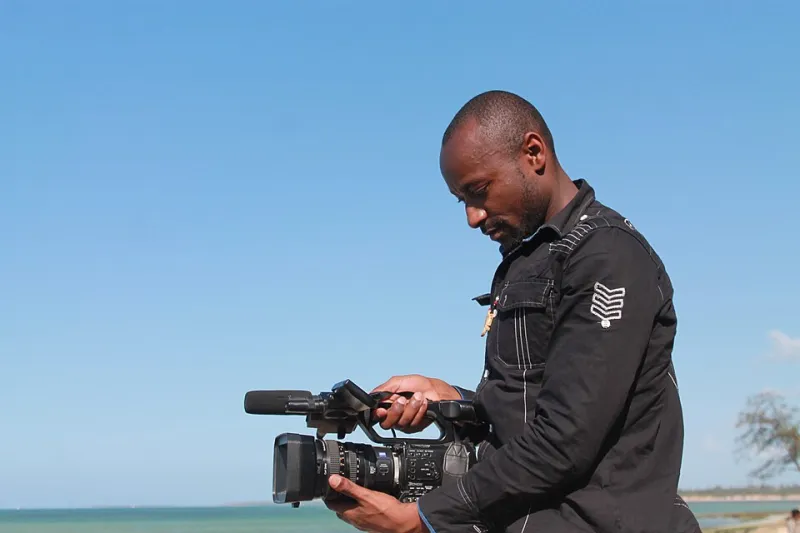
Photo: Mf5418, CC BY 4.0, via Wikimedia Commons
There's a moment every indie filmmaker knows too well. You've finished the film. It's good — maybe it's really good. You submit to festivals, you wait, you refresh your email, and then... nothing. Or worse, you get into a mid-tier fest, generate some genuine buzz, and still can't land a distribution deal that doesn't feel like signing away your firstborn. For decades, that's just been the cost of doing business in independent cinema.
But something has shifted. Quietly, then all at once, a wave of filmmakers has started treating distribution not as a door they're waiting to be let through, but as a wall they're just going to knock down themselves.
The Direct Theater Play
One of the most radical moves happening right now is also one of the most straightforward: filmmakers are calling up independent cinemas and booking their own screenings.
It sounds almost too simple, but the mechanics are real. Platforms like Eventive and Theatrical.com have made it genuinely feasible for a filmmaker without a distribution company behind them to negotiate directly with arthouse cinemas, community theaters, and even some regional chains. A filmmaker in Austin can reach out to a theater in Portland, share audience data, offer a favorable revenue split, and land a weekend run — no middleman required.
Director Maya Olvera, whose debut feature Secondhand Light screened in 14 cities without a single traditional distributor attached, described the process as "weirdly liberating and absolutely exhausting in equal measure." She spent three months cold-emailing theater programmers, building relationships, and pitching her film the same way you'd pitch a product to a retailer. "Nobody told me I could do this," she said in a recent interview. "But nobody told me I couldn't, either."
The key insight here is that independent cinemas are often more open to direct relationships than filmmakers assume. Many of them are struggling too — competing with streaming, trying to differentiate their programming, and actively looking for films that feel distinct from whatever the multiplex down the street is running. A passionate filmmaker with a compelling movie and a ready-made local audience is actually a pretty attractive proposition.
Cracking the Streaming Black Box
Theater runs are one thing, but streaming is where the real audience lives right now, and the algorithm gatekeeping on major platforms can feel even more impenetrable than the festival circuit. Getting on Netflix or Hulu without a distributor in your corner is essentially impossible. But the streaming landscape is a lot wider than those two names.
Savvy filmmakers are increasingly treating platforms like Mubi, Fandor, Plex, Tubi, and even Amazon's Prime Video Direct as legitimate strategic targets rather than consolation prizes. And they're coming to those conversations armed with data.
This is where things get genuinely interesting. Tools like Google Trends, Letterboxd analytics, social listening platforms, and even subreddit analysis are giving filmmakers the ability to demonstrate real audience demand before a single deal is signed. If you can show a platform that your film sits at the intersection of three trending audience interests — say, slow cinema, environmental storytelling, and queer narratives — and back that up with engagement numbers from your own community, you're no longer just a filmmaker asking for a chance. You're a filmmaker presenting a business case.
Jordan Fisk, who directed the micro-budget documentary The Quiet Grid, used exactly this approach to land a licensing deal with a niche streaming platform after being passed over by larger services. "I built a 12-page deck that looked more like a market research report than a pitch," Fisk said. "I showed them where my audience was already gathering online, what they were already watching, and why my film filled a specific gap. It worked."
The Hybrid Release Model
Maybe the most genuinely disruptive strategy emerging from this generation of filmmakers is the hybrid release — a carefully sequenced rollout that blends theatrical, streaming, and direct-to-audience sales in a way that maximizes both visibility and filmmaker revenue.
Traditional release windows exist largely to protect the economics of distributors and exhibitors. A film hits theaters, then waits 90 days before hitting VOD, then another stretch before a streaming deal kicks in. That structure made sense when distributors were the ones taking all the financial risk. When a filmmaker is self-distributing, those windows often just mean leaving money on the table.
The new playbook looks different. Some filmmakers are launching with a limited theatrical run — enough to generate reviews, press, and word-of-mouth — while simultaneously offering a direct purchase or rental through their own website via platforms like Vimeo On Demand or Gumroad. The theatrical run creates cultural legitimacy. The direct sales channel captures fans who can't make it to one of the 12 cities where the film is actually screening.
Then, once the direct sales window has run its course, the film moves to a streaming platform deal negotiated from a position of demonstrated demand rather than desperate hope.
The economics here are genuinely different. A filmmaker who sells 2,000 direct rentals at $5 each has made $10,000 that would have largely evaporated into a distributor's overhead under a traditional deal. It's not Hollywood money. But it's filmmaker money, and that distinction matters enormously when you're trying to make your next film.
What This Means for the Rest of Us
Look, none of this is easy. Self-distribution is real work — unglamorous, time-consuming, and requiring skills that film school doesn't exactly prioritize. You have to be willing to think like a marketer, a data analyst, and a businessperson, sometimes all in the same afternoon.
But what's genuinely exciting about this moment is that the tools exist. The platforms exist. The audience appetite for independent cinema is real and measurable. What's changing is that filmmakers are finally starting to act like they know all of that.
The old model asked filmmakers to make the film and then wait — wait for a festival, wait for a distributor, wait for permission. The new model asks filmmakers to make the film and then work. That's a harder ask. But it's also a more honest one, and it comes with something the old model almost never offered: control.
At Busk Films, we've always believed that the most interesting cinema comes from people who refuse to wait for someone else to validate what they've made. The filmmakers figuring out distribution on their own terms are the same ones who've been figuring out production on their own terms for years. They're not hacking the system so much as building a new one, one booking email and one data deck at a time.
The gatekeepers should probably pay attention.